





Choosing a software development company has become a strategic business decision rather than a procurement exercise. For large enterprises, the right technology partner influences far more than project timelines. It affects product quality, engineering velocity, operational resilience, customer experience, security, and ultimately the organization’s ability to innovate.
Across North America, enterprise leaders are accelerating investments in cloud platforms, AI-powered applications, digital transformation initiatives, and backend modernization. At the same time, many organizations are discovering that selecting the wrong development partner can introduce years of technical debt, increase infrastructure costs, and slow down product delivery.
While nearly every software company promises experienced engineers and successful projects, enterprise buyers need a more disciplined evaluation process. The decision should be based on engineering capability, delivery maturity, architectural thinking, and long-term partnership potential rather than marketing claims.
Start with Proven Enterprise Experience
Experience is often measured by the number of years a company has been in business or the brands displayed on its website. Those metrics provide some context, but they rarely explain whether the company can solve enterprise-scale engineering challenges.
A more valuable question is whether the development partner has built and maintained production systems similar to yours. Enterprise software operates under different expectations than startup applications. Systems must support millions of users, integrate with multiple internal platforms, maintain high availability, and evolve without disrupting business operations.
When reviewing previous work, look beyond screenshots and product descriptions. Strong case studies explain the engineering problems that existed, the architectural decisions that were made, and the measurable business outcomes achieved after implementation. Whether the objective was reducing infrastructure costs, improving API performance, or modernizing legacy platforms, the best partners demonstrate impact through measurable results rather than general success stories.
Reviews Reveal More Than Marketing Pages
Every software company highlights positive customer stories, but independent reviews often provide a more balanced perspective.
Platforms such as Clutch, G2, and GoodFirms allow enterprise buyers to understand how a company performs throughout an engagement rather than simply how it presents itself. Instead of focusing exclusively on star ratings, pay attention to recurring themes. Consistent feedback about communication, engineering quality, transparency, and problem-solving usually says more than individual reviews.
Long-term client relationships are another strong indicator of quality. Companies that continue working with enterprise customers over several years have typically earned that trust through consistent delivery and reliable engineering practices.
Engineering Capability Should Be Obvious
A capable development company should demonstrate technical leadership from the very first conversation.
Instead of immediately discussing timelines or pricing, experienced engineering teams spend time understanding your architecture, operational challenges, security requirements, and business goals. They ask detailed questions about scalability, integrations, deployment strategies, observability, and future product direction because these decisions shape the long-term success of the platform.
The conversation should naturally include topics such as distributed systems, cloud architecture, API design, infrastructure automation, performance optimization, and resilience. If technical discussions remain superficial, the organization may lack the architectural expertise required for enterprise software.
Modern Technology Choices Matter
Technology decisions influence maintenance costs, scalability, hiring, and product evolution for years after launch.
A reliable software partner understands current backend technologies while remaining pragmatic about implementation. Rather than recommending technologies because they are popular, experienced engineering teams explain why a particular stack aligns with business requirements and operational maturity.
Whether the solution involves Node.js, Java, Go, .NET, Python, Kubernetes, GraphQL, PostgreSQL, Kafka, AWS, Azure, or Google Cloud, every technology decision should support performance, maintainability, and future growth rather than adding unnecessary complexity.
Security Cannot Be an Afterthought
Security has become one of the most important evaluation criteria for enterprise software development.
Modern applications process sensitive customer information, financial transactions, healthcare records, and business-critical operational data. Security therefore needs to be integrated into every phase of development rather than treated as a compliance exercise before deployment.
Organizations should evaluate how a development company approaches secure coding standards, vulnerability management, infrastructure security, identity management, dependency scanning, and continuous monitoring. Experience with regulatory frameworks such as SOC 2, HIPAA, PCI DSS, or GDPR is particularly valuable for enterprises operating in regulated industries.
A mature engineering organization views security as a continuous engineering discipline instead of a final project milestone.
Evaluate Delivery Maturity
Successful software projects rely on repeatable engineering processes as much as technical talent.
Development partners should demonstrate mature practices around automated testing, continuous integration, continuous deployment, code reviews, release management, infrastructure as code, and production monitoring. These practices reduce deployment risk while enabling faster feature delivery and improved software quality.
Engineering maturity also becomes visible through documentation, sprint planning, technical governance, and the ability to communicate project risks before they become business problems.
Organizations with disciplined delivery processes consistently outperform those that depend on individual developers rather than standardized engineering practices.
Think Beyond the Initial Launch
Enterprise software is never truly finished.
Applications continue to evolve through new features, infrastructure improvements, security updates, and performance optimization. Choosing a partner that only focuses on initial development often creates unnecessary transition challenges after launch.
Instead, evaluate how the company supports long-term product ownership. Reliable partners remain involved through monitoring, optimization, platform modernization, and continuous improvement. This ongoing relationship allows engineering teams to preserve institutional knowledge while reducing operational risk.
For enterprise organizations managing mission-critical systems, long-term collaboration often delivers significantly greater value than short-term project engagements.
Why Engineering Culture Should Influence Your Decision
Technology alone does not determine project success. Engineering culture plays an equally important role.
The strongest software development companies operate as an extension of internal engineering teams rather than external vendors. They communicate openly, challenge assumptions when necessary, document architectural decisions, and maintain transparency throughout delivery.
This collaborative mindset helps organizations reduce project uncertainty while improving alignment between engineering, product, infrastructure, and executive stakeholders.
A partner that values ownership and continuous improvement will continue creating business value long after the first production release.
An Example of an Engineering-First Partner
Organizations looking for an enterprise technology partner should prioritize companies that combine strong engineering fundamentals with proven delivery experience across complex digital products.
GeekyAnts is one such example. The company has delivered enterprise solutions across backend engineering, cloud-native platforms, AI-powered applications, mobile ecosystems, and digital transformation initiatives for organizations worldwide. Beyond implementation, GeekyAnts emphasizes scalable system architecture, DevOps automation, platform engineering, and long-term product evolution. Its active contribution to the open-source ecosystem also reflects a strong engineering culture focused on innovation, maintainability, and modern software development practices.
For enterprise leaders seeking more than additional development capacity, this combination of technical depth and product thinking makes engineering-focused partners particularly valuable.
Final Thoughts
Hiring a software development company is one of the most important decisions technology leaders make. The right partner contributes architectural expertise, delivery discipline, and strategic guidance that continues delivering value well beyond the first release.
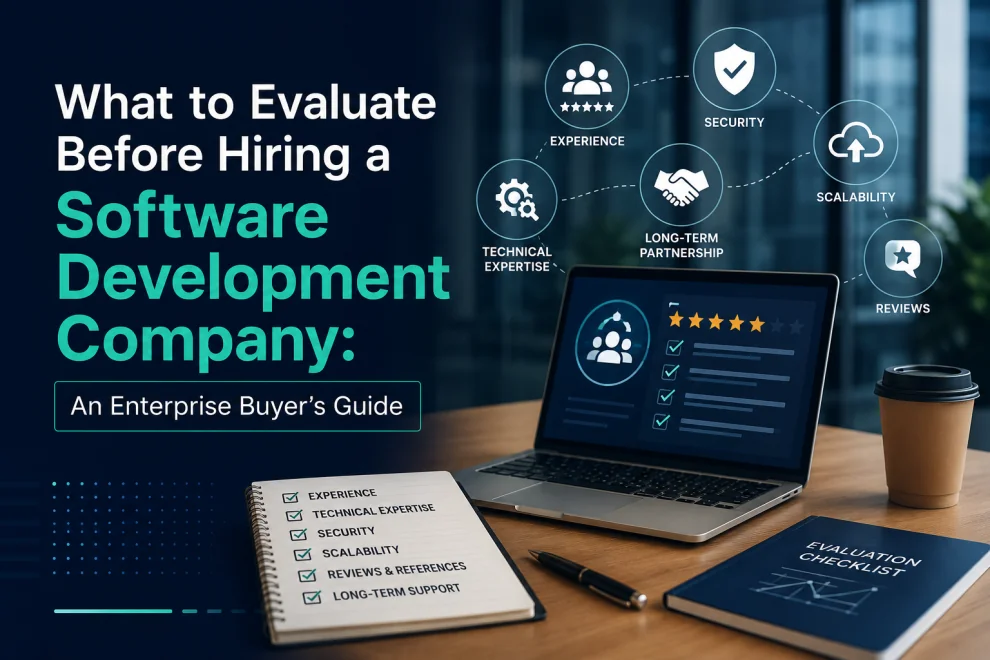
Rather than selecting a vendor based solely on cost or portfolio size, enterprise organizations should evaluate engineering maturity, independent customer reviews, security practices, cloud expertise, scalability experience, and long-term partnership capabilities.
As digital transformation continues to reshape industries, the companies that build resilient, secure, and scalable platforms will be those that choose engineering partners capable of delivering lasting business outcomes instead of simply completing projects.
Frequently Asked Questions
How do enterprises choose the right software development company?
The best approach is to evaluate engineering expertise, enterprise delivery experience, security practices, client reviews, architecture capabilities, and long-term support rather than focusing only on pricing.
Why are independent client reviews important?
Independent reviews provide insight into communication, delivery quality, technical expertise, and customer satisfaction that marketing material alone cannot demonstrate.
What technical expertise should a backend development company have?
Enterprise backend partners should have strong capabilities in cloud architecture, API development, distributed systems, DevOps, database optimization, observability, security, and scalable infrastructure.
Why is long-term support important?
Enterprise applications require continuous optimization, maintenance, security updates, and feature enhancements. A long-term engineering partner helps ensure the platform remains reliable and scalable as business requirements evolve.
For more, visit our homepage!

Add Comment