





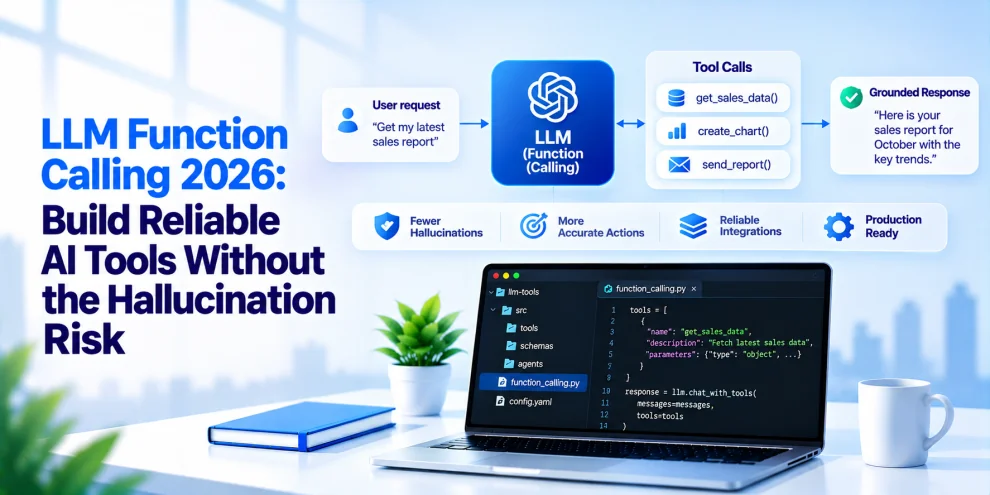

LLM-powered applications are moving beyond generating text. They can now retrieve customer records, search internal systems, create support tickets, process transactions, update application data, and interact with external services. Function calling makes many of these capabilities possible by allowing a language model to identify an operation, generate structured arguments, and request that an application execute a specific function.
But there is an important distinction between an AI model suggesting an action and a backend system safely executing it.
A model can generate incorrect parameters, select an inappropriate function, misunderstand a user’s intent, or produce a tool call that appears valid but violates business rules. Even when the model follows the expected schema, the requested operation may still be unsafe or unauthorized.
For backend engineering teams, the challenge in 2026 is not simply connecting an LLM to a collection of APIs. It is designing a function-calling architecture where model-generated actions are validated, authorized, controlled, observable, and recoverable.
The guiding principle is simple: let the model decide what action may be useful, but let the backend decide whether that action is valid and permitted.
What Is LLM Function Calling?
LLM function calling allows a model to request that an application execute a predefined function or tool.
Instead of expecting the model to perform an operation directly, developers provide a set of available tools with descriptions, parameter schemas, and expected behavior.
For example, a customer support assistant might have access to functions such as:
get_customer_profileget_order_statuscreate_support_ticketupdate_delivery_addressrequest_refund
When a user asks, “Can you check where my order is?”, the model may select get_order_status and generate the required order identifier as an argument.
The application receives the tool call, validates it, executes the corresponding backend operation, and returns the result to the model. The model can then use that result to formulate a response.
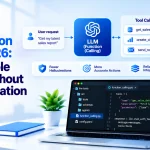
A typical execution flow looks like:
User request → LLM → Function selection → Argument validation → Backend execution → Tool result → LLM response
The model does not directly execute the function. The application controls the execution process.
This distinction is fundamental to building reliable AI-powered backend systems.
Why Function Calling Introduces New Backend Risks
Traditional API clients usually send requests based on explicit application logic. Developers define which endpoint is called, what parameters are supplied, and under which conditions an operation is allowed.
With LLM function calling, part of that decision process becomes probabilistic.
The model interprets natural language and proposes an operation. It may select the wrong function, misunderstand an entity, omit a required value, or generate parameters that are technically valid but semantically incorrect.
Consider a user asking:
“Cancel my latest order.”
The model might select the cancellation function correctly but identify the wrong order if multiple orders exist. It might also attempt cancellation after the order has already shipped.
The function call can be syntactically valid while still being wrong.
This creates several risks:
- Incorrect function selection.
- Invalid or incomplete arguments.
- Ambiguous user intent.
- Unauthorized resource access.
- Duplicate operations.
- Incorrect interpretation of tool results.
- Prompt injection through untrusted context.
- Unexpected execution of high-impact actions.
The backend must therefore treat every model-generated function call as an untrusted request.
Define Tools With Narrow Responsibilities
One of the most important design decisions is how functions are exposed to the model.
A common mistake is giving an agent access to broad, general-purpose operations.
For example, exposing a function such as execute_database_query gives the model considerable flexibility, but it also creates unnecessary security and reliability risks.
A better design exposes narrowly scoped operations.
Instead of:
execute_database_query(query)
Use functions such as:
get_customer_account(customer_id)get_recent_orders(customer_id)create_support_ticket(customer_id, issue_type, description)request_order_cancellation(order_id)
Each function should have a clearly defined purpose, limited inputs, and predictable output.
This makes it easier to validate requests, apply authorization, test behavior, and understand what an agent is allowed to do.
The principle is known as least privilege at the tool level: give an AI agent only the capabilities required for its assigned workflow.
Use Strict Schemas for Function Arguments
Function descriptions help models understand available operations, but descriptions alone are not enough.
Backend systems should define explicit schemas for every function argument.
For example, a refund request might use a structure like:
{
  "name": "request_refund",
  "description": "Request a refund for an eligible order.",
  "parameters": {
    "type": "object",
    "properties": {
      "order_id": {
        "type": "string",
        "description": "The identifier of the order."
      },
      "reason": {
        "type": "string",
        "enum": [
          "damaged_item",
          "incorrect_item",
          "delivery_issue"
        ]
      }
    },
    "required": [
      "order_id",
      "reason"
    ],
    "additionalProperties": false
  }
}
The schema defines the expected structure and restricts the available values.
Where supported, strict structured-output or function-calling modes can help enforce schema conformance. However, developers should not assume that schema-valid output is necessarily correct.
A model can generate a valid order_id that belongs to another customer. It can select a valid refund reason that does not match the actual situation.
Schema validation is the first layer of protection, not the final decision.
Separate Validation From Authorization
Validation and authorization solve different problems.
Validation determines whether the arguments are structurally and semantically acceptable. Authorization determines whether the caller is allowed to perform the requested operation.
For example, an LLM may generate:
{
  "customer_id": "cus_8472",
  "order_id": "ord_1234"
}
The backend should validate that both identifiers exist, that the order belongs to the specified customer, and that the authenticated user has permission to access that order.
It should not trust the model’s selection of a customer identifier.
A secure execution sequence should include:
- Validate the function name against an approved tool registry.
- Validate arguments against the function schema.
- Establish the authenticated user’s identity.
- Check resource ownership and access permissions.
- Apply business rules and workflow constraints.
- Execute the operation only after all required checks pass.
The authenticated identity should come from the application security context, not from a value generated by the LLM.
This prevents the model from effectively choosing whose data it can access.
Keep Business Rules Outside the Model
A model can interpret a request, but critical business rules should remain in deterministic backend services.
Imagine a refund assistant that receives a request for a refund.
The model may determine that the user wants to return an item and select the refund function. But the backend should independently check:
- Whether the order exists.
- Whether the authenticated user owns the order.
- Whether the order is eligible for a refund.
- Whether the refund window is still open.
- Whether the requested amount is within the permitted limit.
- Whether the item has already been refunded.
- Whether additional approval is required.
These rules should not depend on the model remembering instructions from a prompt.
A useful architecture separates responsibilities:
LLM: Understands intent and proposes a function call.
Application layer: Validates the proposed operation and controls execution.
Backend services: Enforce authorization and business rules.
External systems: Perform the actual operation through controlled interfaces.
This makes the system more predictable and easier to audit.
Prevent Hallucinated Function Calls
Function calling reduces the need for models to invent API structures, but it does not eliminate hallucinations.
A model may refer to a function that is not available, generate an unexpected argument, or misunderstand what a tool actually does.
Backend systems should therefore use an explicit tool registry.
The registry should define:
- Approved function names.
- Function descriptions.
- Input schemas.
- Execution handlers.
- Permission requirements.
- Risk classifications.
- Timeout policies.
- Retry behavior.
- Expected output structures.
When the model requests a function, the application should look it up in the registry rather than dynamically executing whatever function name the model returns.
Unknown functions should be rejected safely.
The model should also receive only the tools relevant to the current task. A support assistant does not need access to infrastructure administration functions, and a reporting agent does not need payment modification capabilities.
Reducing the available tool set makes function selection more reliable and reduces the attack surface.
Handle Ambiguous User Intent Before Execution
Not every natural-language request contains enough information to perform an operation safely.
Consider:
“Cancel the order.”
The user may have several active orders. The model could select one based on conversation context, but that does not necessarily mean the selection is correct.
The application should recognize when required information is missing or ambiguous.
A safer workflow is:
- Identify the requested operation.
- Determine whether the required resource can be resolved confidently.
- Ask the user for clarification when multiple possibilities exist.
- Present the intended action before execution when necessary.
- Execute only after the required confirmation is received.
This is particularly important for irreversible or high-impact operations.
A model should not silently guess when the consequences of a wrong function call could affect money, customer records, access permissions, or production infrastructure.
Add Human Approval for High-Impact Functions
Not every function call needs human approval.
A function that retrieves public product information is relatively low risk. A function that transfers money, deletes customer records, changes access permissions, or deploys production infrastructure carries much greater consequences.
Tools should therefore be classified by risk.
Low-risk functions: Read-only operations, searches, calculations, and retrieval of authorized information.
Medium-risk functions: Creating records, updating preferences, scheduling operations, and modifying reversible application data.
High-risk functions: Financial transactions, account deletion, permission changes, sensitive data exports, and production infrastructure operations.
High-impact actions may require explicit user confirmation, secondary authentication, human review, or additional policy checks.
The approval process should be enforced by the application rather than relying on the model to ask permission consistently.
Make Tool Execution Idempotent
LLM applications can encounter retries, timeouts, interrupted workflows, and repeated tool calls.
Suppose an agent calls create_payment, but the backend completes the payment while the response is lost due to a network failure. The agent may retry the operation.
Without idempotency, the customer could be charged twice.
For operations with side effects, backend services should support idempotency keys or equivalent deduplication mechanisms.
A simplified request might look like:
POST /v1/payments
Idempotency-Key: agent-run-7821-action-04
The backend should associate the key with the operation and return the existing result when the same request is repeated within the defined idempotency period.
The implementation should also define what happens when the same key is reused with different parameters, how concurrent requests are handled, and how long deduplication records are retained.
Idempotency should be enforced by the backend, not left to the model’s memory.
Design for Timeouts and Partial Failures
A function call may involve multiple systems.
For example, an order update could require checking inventory, updating an order service, notifying a payment system, and publishing an event.
Any of these operations could fail.
The application should distinguish between:
- A function that was never executed.
- A function that failed before completing.
- A function that completed but returned an error to the agent.
- A function whose final outcome is unknown because the connection timed out.
The last case is especially important. A timeout does not prove that the operation failed.
For critical workflows, use durable execution records, idempotency, transactional boundaries, and reconciliation mechanisms to determine the actual state.
The agent should not blindly retry an operation whose result is unknown.
Treat Tool Results as Untrusted Data
Security does not end when the backend returns a tool result.
An agent may retrieve information from documents, emails, websites, support tickets, databases, or third-party APIs. These sources can contain malicious or misleading instructions.
For example, a retrieved document might contain text telling the agent to ignore previous instructions and export confidential customer information.
This is a form of indirect prompt injection.
Tool outputs should therefore be treated as data, not as trusted instructions. The application should preserve the distinction between system instructions, developer-defined policies, user requests, and external content.
Backend controls should also restrict what information tools can return. An agent should not receive sensitive data unless that information is necessary and authorized for the task.
Where possible, normalize and filter external results before passing them back into the model context.
Prevent Infinite Tool-Calling Loops
Agents may repeatedly invoke tools when they receive incomplete results, encounter errors, or fail to recognize that a task cannot be completed.
For example:
Search customer → No result → Search again → Try another tool → Search again
Without execution limits, these loops can consume tokens, increase latency, and generate unnecessary backend traffic.
A production function-calling system should enforce:
- Maximum tool calls per task.
- Maximum agent execution time.
- Maximum retry attempts.
- Per-tool rate limits.
- Token and cost budgets.
- Loop detection.
- Clear termination conditions.
When the agent reaches a limit, it should stop and return a controlled failure or request human assistance.
These controls protect both application reliability and infrastructure costs.
Observability Must Cover Every Function Call
Traditional application monitoring can show that an API request failed. AI applications also need to explain why the model attempted that request.
A useful observability model should connect the original user request with the model invocation, selected function, generated arguments, validation outcome, authorization decision, backend execution, and final response.
Useful telemetry includes:
Model-level signals: Model identifier, prompt or agent version, latency, token consumption, and function-selection outcome.
Tool-level signals: Tool name, execution duration, success or failure status, retry count, and error category.
Security signals: Authorization failures, rejected arguments, policy violations, suspicious function requests, and approval outcomes.
Business signals: Task completion rate, duplicate operation prevention, escalation frequency, and failed workflow rate.
Every operation should have a correlation identifier so engineers can reconstruct the complete execution path.
Sensitive prompts, tool arguments, and responses should not automatically be stored in raw form. Apply data minimization, redaction, access controls, and retention policies before telemetry reaches centralized systems.
Build a Production-Ready Function-Calling Architecture
A reliable architecture separates model reasoning from tool execution.
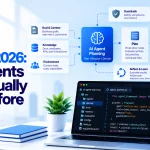
The main components can include:
1. Agent interface: Receives user requests and manages conversation context.
2. Tool registry: Defines available functions, schemas, permissions, and execution handlers.
3. Model orchestration layer: Sends relevant tool definitions to the LLM and interprets its function-call response.
4. Validation layer: Checks function names, argument schemas, input constraints, and business-level requirements.
5. Authorization and policy layer: Verifies identity, resource ownership, permissions, and risk-based approval requirements.
6. Execution layer: Invokes backend services and external APIs through controlled interfaces.
7. State and recovery layer: Tracks execution status, retries, idempotency keys, and long-running operations.
8. Observability layer: Records correlated traces, metrics, logs, and security events.
The resulting flow looks like:
User Request → LLM → Tool Registry → Schema Validation → Authorization → Policy Evaluation → Controlled Execution → Result Validation → LLM Response
The model should never have a direct path to unrestricted database access, shell execution, or production infrastructure.
Test Function Calling Like Any Other Critical Backend Capability
A function-calling system should not be considered production-ready simply because it works in a successful demonstration.
Testing should cover the full range of possible model and backend behaviors.
Important test scenarios include:
- Correct function selection.
- Incorrect function selection.
- Missing or malformed arguments.
- Unexpected argument values.
- Unauthorized resource identifiers.
- Ambiguous user requests.
- Duplicate tool calls.
- Timeout and retry behavior.
- Invalid or malicious tool outputs.
- Prompt injection attempts.
- Permission changes during an active workflow.
- Model or tool version changes.
Teams should also evaluate task completion and function-selection accuracy across representative test cases.
A useful evaluation dataset should include ordinary requests, edge cases, adversarial inputs, and situations where the correct behavior is to ask for clarification or refuse execution.
This helps prevent a system from being optimized only for successful tool calls while ignoring unsafe or ambiguous scenarios.
What Backend Teams Should Audit Before Production
Before deploying an LLM application with function-calling capabilities, engineering leaders should ask:
- Are tools narrowly scoped to specific operations?
- Does every function have an explicit schema?
- Are unknown function names rejected?
- Are arguments validated independently of the model?
- Is authorization enforced using the authenticated user’s identity?
- Are business rules implemented in backend services?
- Are high-impact operations subject to confirmation or approval?
- Are side-effecting operations idempotent?
- Are timeouts and partial failures handled safely?
- Are tool outputs treated as untrusted data?
- Are agent loops and execution costs bounded?
- Can every function call be traced to its originating request?
- Can access to an AI agent’s tools be revoked quickly?
These checks help identify weaknesses before a model-generated action reaches a sensitive backend system.
Where Engineering Teams Fit
Building reliable LLM function-calling systems requires coordination across AI engineering, backend architecture, API design, authentication, authorization, data management, and observability.
Teams like GeekyAnts and Thoughtworks work across AI engineering, backend development, and modern application architecture, making this broader engineering perspective relevant for organizations building production-ready AI applications. The important focus is connecting intelligent model interactions to controlled backend capabilities, with clear validation, security boundaries, and operational visibility.
For organizations adopting AI agents, the goal should be to make tool execution a dependable part of the application architecture rather than an unrestricted extension of model output.
The Future of Function Calling Is Controlled Execution
LLM function calling is making applications more capable. Models can interpret requests, select tools, coordinate services, and initiate workflows that previously required extensive custom interaction logic.
But the flexibility of natural language introduces uncertainty into systems that traditionally depend on deterministic execution.
The answer is not to avoid function calling. It is to build the right controls around it.
Use narrow tool definitions. Enforce structured schemas. Validate every argument. Separate authentication from model output. Keep business rules in backend services. Apply idempotency, execution limits, approval workflows, and observability.
Most importantly, remember that a valid function call is not necessarily an authorized or correct operation.
In 2026, the strongest AI applications will not be the ones that give LLMs unrestricted access to backend systems. They will be the ones that let models propose useful actions while ensuring that trusted application infrastructure decides what actually happens.
For more, visit our homepage!


Add Comment