




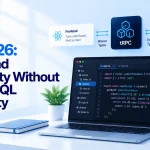


Every great digital product has one thing in common: a reliable backend. While users interact with beautiful interfaces and seamless experiences, the real work happens behind the scenes. From processing millions of API requests to securing sensitive customer data, backend applications power almost every digital interaction.
As businesses across the United States continue investing in AI, cloud computing, and real-time applications, backend development has become a strategic advantage rather than just a technical necessity.
Whether you’re building a SaaS platform, an enterprise application, a healthcare system, or an eCommerce marketplace, choosing the right backend architecture directly impacts performance, scalability, and long-term costs.
What Is Backend Application Development?
Backend application development refers to building the server-side logic that powers software applications. It includes everything users don’t see but rely on every second.
A backend typically manages:
- Business logic
- Databases
- Authentication and authorization
- APIs
- Payment processing
- Cloud infrastructure
- File storage
- Third-party integrations
- Security
- Performance optimization
Think of the backend as the engine of a car. A sleek design may attract attention, but without a powerful engine, nothing moves.
Why Backend Development Matters More Than Ever
Digital products today serve thousands or even millions of users simultaneously. Modern applications must process data instantly while maintaining reliability around the clock.
Organizations need backend systems capable of supporting:
- AI-powered features
- Real-time analytics
- Mobile applications
- IoT devices
- Cloud-native deployments
- Global user traffic
- High availability
- Enterprise-grade security
A weak backend often leads to slow performance, downtime, security vulnerabilities, and expensive infrastructure costs.
Characteristics of a Modern Backend
Modern backend systems are designed for flexibility and scale rather than simply storing data.
Some essential characteristics include:
Cloud-Native Architecture
Applications built for AWS, Azure, or Google Cloud can automatically scale based on demand, reducing operational overhead while improving reliability.
API-First Development
Most businesses now operate multiple digital products, including websites, mobile apps, partner portals, and internal dashboards.
API-first backend development allows all these platforms to share the same business logic efficiently.
Microservices
Instead of deploying one massive application, organizations increasingly adopt microservices.
Each service handles a specific responsibility such as:
- User management
- Payments
- Notifications
- Inventory
- Analytics
This makes deployments faster and reduces the impact of failures.
Strong Security
Cybersecurity has become a board-level priority.
Modern backend applications include:
- JWT authentication
- OAuth integration
- Encryption
- Role-based access control
- Secure API gateways
- Audit logging
- Compliance support
Security is no longer an afterthought.
Popular Backend Technologies in 2026
Several backend technologies continue to dominate enterprise software development.
Node.js
Ideal for high-performance APIs, real-time communication, and scalable web applications.
Python
Widely used for AI applications, automation, machine learning services, and data-intensive platforms.
Java
A preferred choice for enterprise software requiring stability and long-term maintainability.
Go
Known for speed and efficiency, Go has become increasingly popular for cloud infrastructure and distributed systems.
.NET
Microsoft’s ecosystem remains a strong choice for enterprise applications, finance, and healthcare platforms.
Selecting the right technology depends on business goals, scalability requirements, existing infrastructure, and development timelines.
Industries Driving Backend Innovation
Backend development is evolving rapidly across multiple industries.
Healthcare
Healthcare applications require secure patient records, HIPAA compliance, appointment scheduling, telemedicine, and AI-powered diagnostics.
Financial Services
Banks and fintech companies depend on secure transaction processing, fraud detection, identity verification, and regulatory compliance.
Retail and eCommerce
Backend systems manage inventory, payment gateways, order processing, customer data, and recommendation engines.
Manufacturing
Industrial platforms integrate IoT devices, predictive maintenance systems, supply chain management, and production analytics.
SaaS Platforms
Software companies require multi-tenant architectures, subscription billing, user management, analytics, and continuous deployment pipelines.
Common Challenges Businesses Face
Many companies encounter backend issues as they grow.
Typical challenges include:
- Slow API performance
- Legacy monolithic systems
- Database bottlenecks
- Security vulnerabilities
- Scaling during peak traffic
- Technical debt
- Complex cloud migrations
- Integration with modern AI services
Addressing these challenges often requires redesigning application architecture rather than simply adding more servers.
Backend Development Best Practices
Successful backend projects prioritize maintainability alongside performance.
Some proven best practices include:
- Design APIs before implementation
- Use containerization with Docker
- Automate deployments using CI/CD
- Monitor applications continuously
- Implement automated testing
- Optimize database queries
- Cache frequently accessed data
- Secure every API endpoint
- Document services thoroughly
These practices reduce downtime while making future development significantly easier.
The Growing Role of AI in Backend Systems
Artificial intelligence is transforming backend development.
Today’s backend platforms increasingly support:
- Intelligent automation
- AI agents
- Recommendation engines
- Predictive analytics
- Natural language processing
- Fraud detection
- Personalized user experiences
This requires backend systems capable of handling GPU workloads, vector databases, model orchestration, and large-scale data pipelines.
Organizations building AI-powered products need infrastructure designed specifically for these workloads.
Choosing the Right Backend Development Partner
Building scalable backend systems requires expertise beyond writing code.
Experienced engineering teams evaluate:
- Business requirements
- Expected user growth
- Cloud architecture
- Security requirements
- Compliance standards
- Performance benchmarks
- Long-term maintenance
Companies like GeekyAnts have helped organizations build scalable backend architectures for enterprise platforms, SaaS products, healthcare solutions, fintech applications, and AI-powered software. By combining modern technologies with product engineering practices, they focus on creating backend systems that remain reliable as businesses grow.
Final Thoughts
Backend application development is the backbone of every successful digital product. As organizations embrace AI, cloud computing, and distributed architectures, investing in a scalable backend is no longer optional.
Businesses that prioritize secure, high-performance backend systems are better positioned to launch faster, scale efficiently, and deliver exceptional user experiences. Whether you’re developing a new SaaS platform or modernizing legacy infrastructure, the quality of your backend architecture will shape your product’s success for years to come.

Add Comment